Running Waste Collection Across 75 Wards: Building the DSCC Waste Management System
How Dhaka South City Corporation records every household collection, bills every holding monthly and watches all 75 wards on one live map, and what we learned building it.
 Oxid Labs Team 3 min read
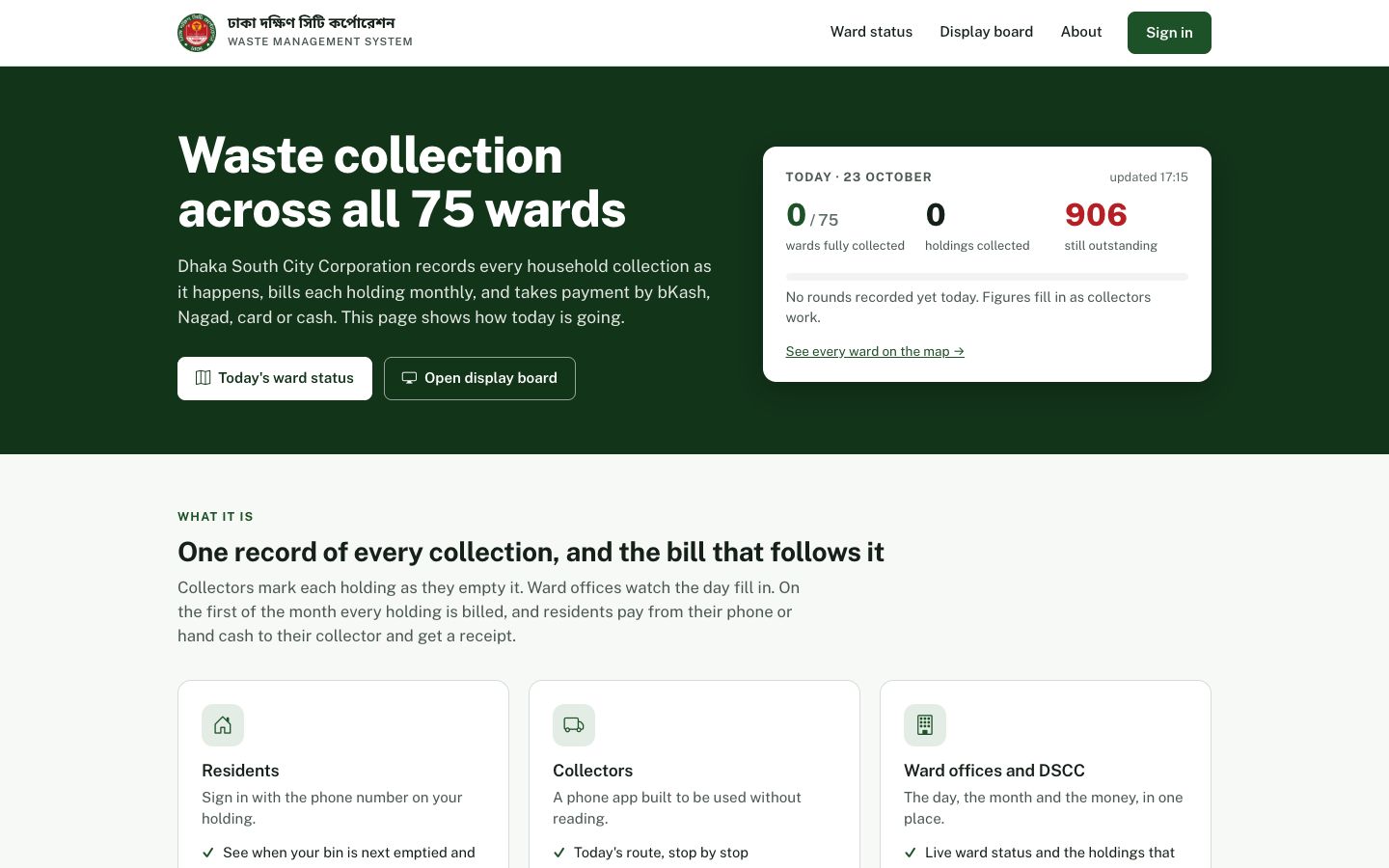
Household waste collection in a city the size of Dhaka South is a daily operation across 75 wards, thousands of holdings, hundreds of collectors and vans. For years most of it ran on paper, phone calls and trust. Nobody could say, on any given afternoon, which streets had been served and which had been missed.
The DSCC Intelligent Waste Management System changes that with one simple idea: one record of every collection, and the bill that follows it.
The daily loop
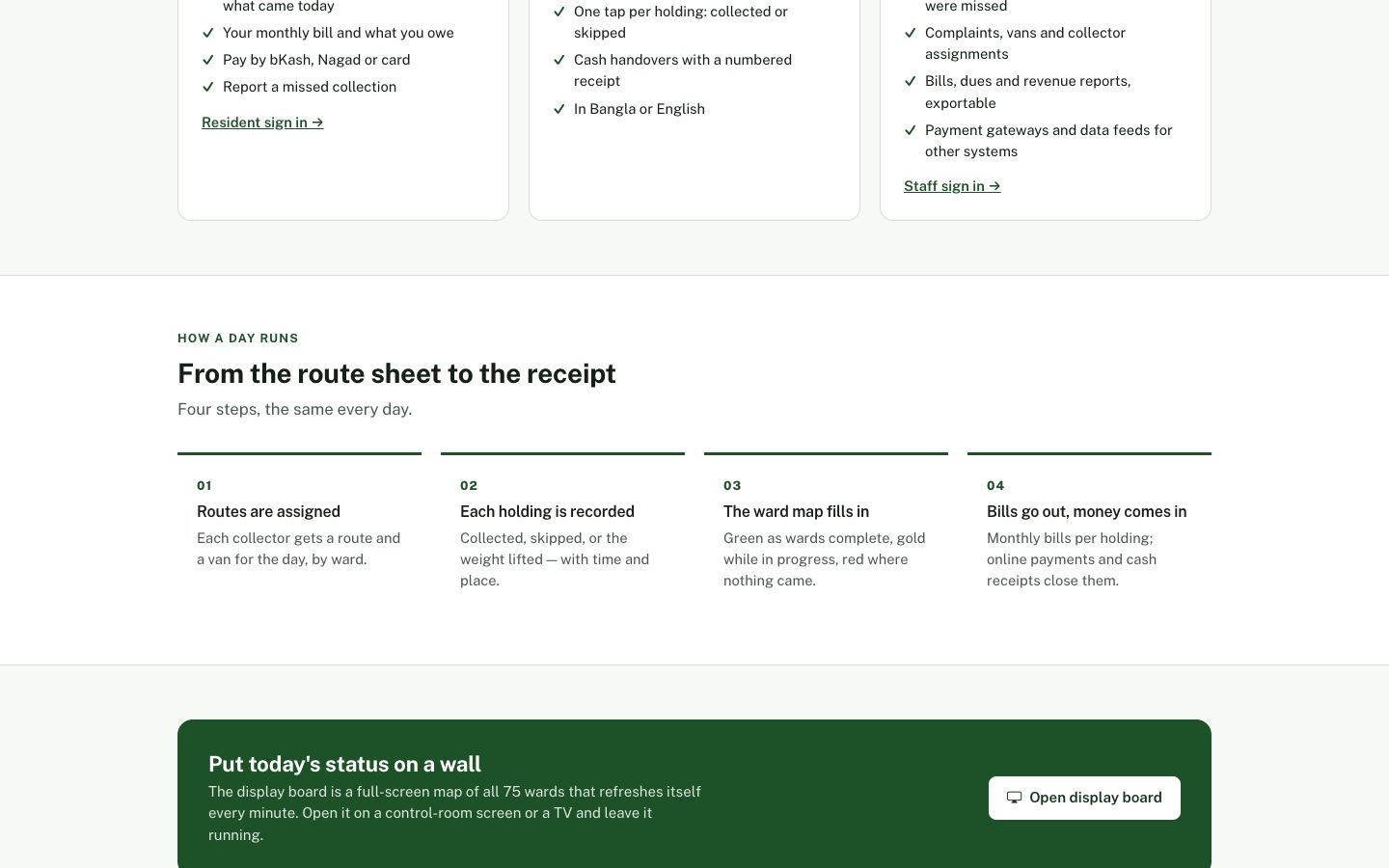
Every day runs the same four steps:
- Routes are assigned. Each collector gets a route and a van for the day, by ward.
- Each holding is recorded. Collected, skipped, or the weight lifted, with time and place.
- The ward map fills in. Green when a ward is complete, gold while in progress, red where nothing came.
- Bills go out, money comes in. Every holding is billed monthly; online payments and cash receipts close the bills.
Getting that loop right mattered more than any individual feature. Once every collection is a record, billing, complaints and reports all follow from the same data.
Designing for the people in the field
The collector app was the hardest part to get right, and the most important. Collectors work fast, outdoors, often with gloves, and not everyone reads comfortably. So the app was built to be used without reading: today’s route stop by stop, one tap per holding for collected or skipped, and large, clear states. It works in Bangla or English.
Cash is still common, so every cash handover produces a numbered receipt. That one detail does a lot for trust, on both sides.
Three audiences, one system
- Residents sign in with the phone number on their holding. They can see when their bin was last emptied, check and pay their monthly bill by bKash, Nagad or card, and report a missed collection.
- Collectors get the route app described above.
- Ward offices and DSCC see the day, the month and the money in one place: live ward status, missed holdings, complaints, vans and collector assignments, and exportable revenue and dues reports.
A map on the wall
Some of the most valuable software is the simplest. The system includes a full-screen display board: a map of all 75 wards that refreshes itself every minute. Put it on a control-room screen or a TV and leave it running. Problems become visible the moment they happen, not at the end of the month.
What other cities and organisations can take from this
- Record the event, not the summary. Daily totals typed into a spreadsheet hide problems; individual records reveal them.
- Build for the least comfortable user first. If the field app works for a collector in the rain, it works for everyone.
- Close the money loop in the same system. When collection and billing share data, disputes shrink.
- Make the state visible. A live map changes behaviour faster than any report.
Location data sits at the heart of this kind of system, from routes to ward boundaries. That is the work of our Geospatial Data Solutions and Data Engineering & Analytics services. If you run field operations and want the same visibility, talk to us.
Need help putting this into practice?
Talk to the team behind these products. We build AI, data and software for businesses like yours.