AI Customer Service in Bangla: Answering Every Message, Comment and Call
Most Bangladeshi businesses sell through Facebook, WhatsApp and the phone, not a website. Here is what it takes for an AI agent to answer customers there, in the language they actually write in.
 Oxid Labs Team 3 min read
Walk into almost any small business in Bangladesh and ask where its customers come from. The answer is rarely “our website”. It is a Facebook Page, a WhatsApp number, the comments under a boosted post, and a phone that rings until late at night.
That is where customer service happens, and it is also where it breaks down. Messages pile up overnight, “দাম কত?” sits unanswered under a post while the customer buys elsewhere, and the one person who knows the price list is on leave. We built Oxid Live to fix exactly this, and along the way learned what an AI agent needs to be genuinely useful here.
It has to speak the way customers write
Customers in Bangladesh do not write in one language. They write in Bangla, in English, and very often in Banglish: Bangla typed with English letters. They also send voice notes. An agent that only understands formal English, or formal Bangla, misses a large share of real conversations.
So the first requirement is simple to state and hard to do well: understand Bangla, Banglish and English, including voice notes, and reply in the customer’s own style.
One agent, every channel
A customer might ask a question in the comments, follow up on Messenger, then call. If each channel has a different bot, or none at all, the answers drift apart.
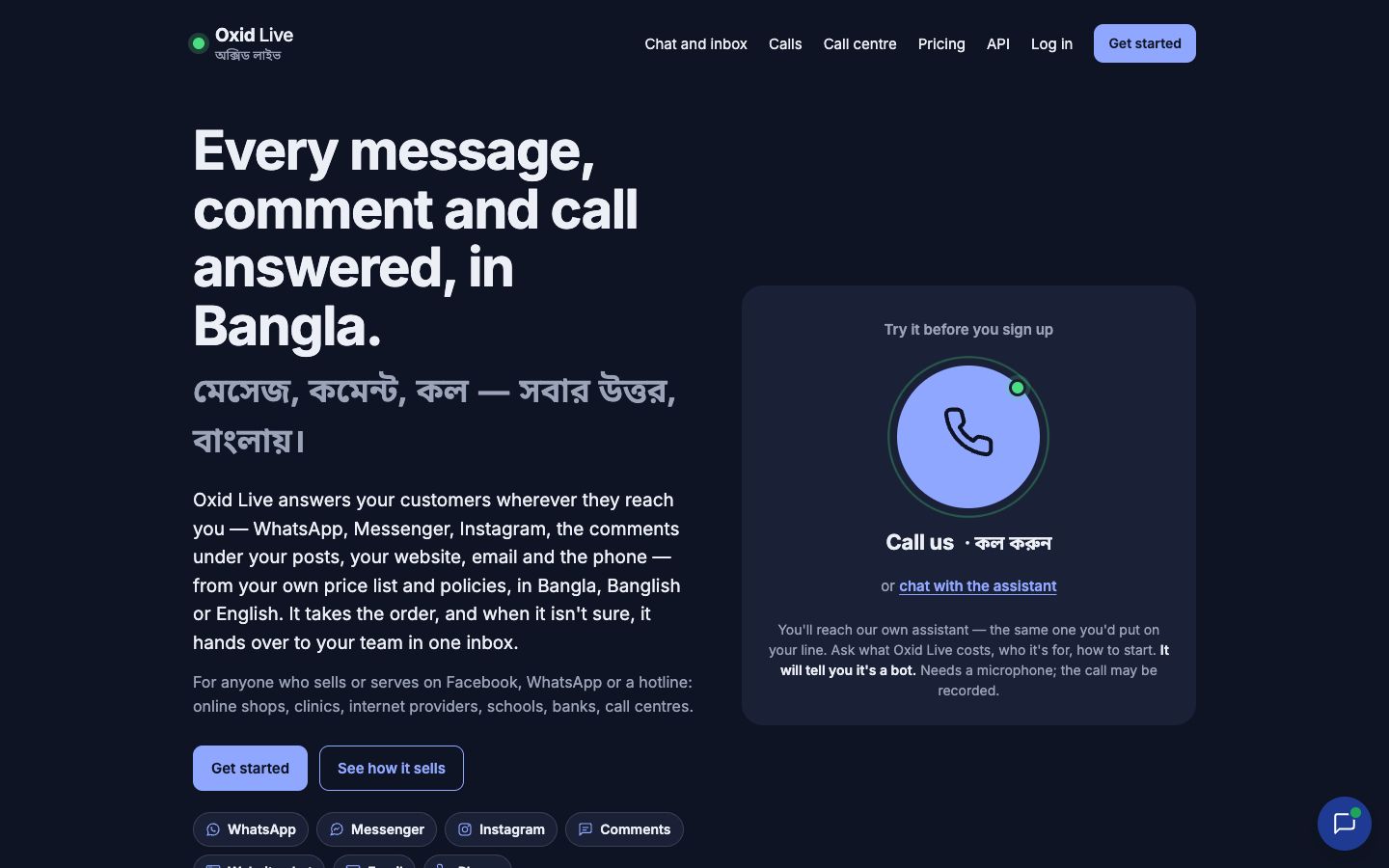
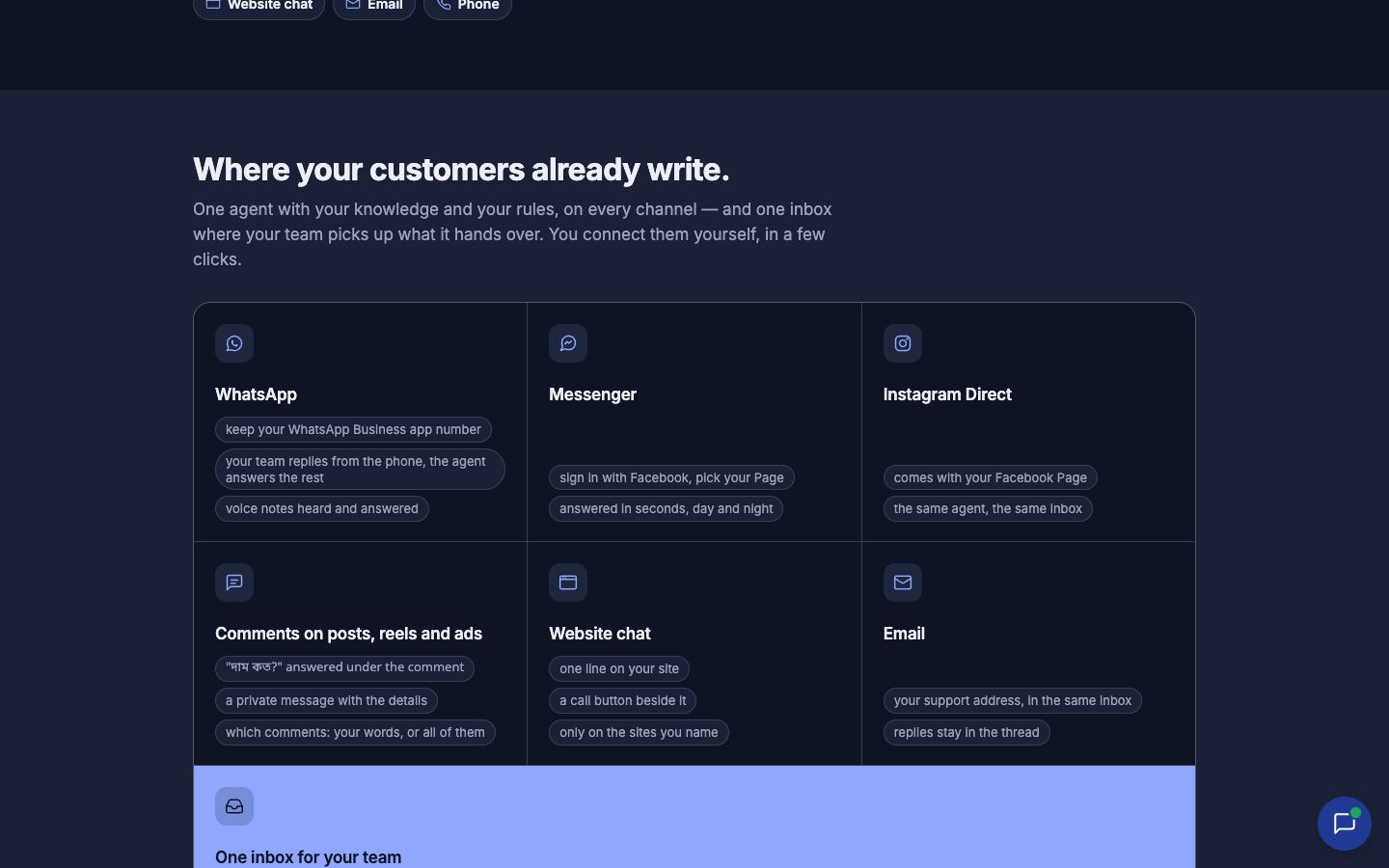
Oxid Live runs one agent across WhatsApp, Messenger, Instagram, post and ad comments, website chat, email and the phone. It answers a price question under a comment, then follows up privately with the details, which is how people on Facebook expect to be served.
Answers come from your knowledge, not the internet
The fastest way to lose a customer’s trust is for an AI to invent a price, a delivery time or a refund policy. A useful business agent must answer from the business’s own price list and policies, and nothing else.
That changes how you set it up. Instead of “training a chatbot”, you give it the documents your best salesperson already uses: products and prices, delivery areas and charges, opening hours, return rules. When those change, you update the document, not the bot.
Knowing when to hand over
No agent should pretend to be certain when it isn’t. The most important feature is often the least glamorous: handing the conversation to a person, with the full history, when the question is unusual, the customer is upset, or money is at stake.
In Oxid Live that hand-over lands in one shared inbox, so the team picks up where the agent stopped instead of asking the customer to repeat everything. It also tells people it is an assistant. Customers are far more forgiving of a bot that is honest about being one.
Taking the order, not just answering
Answering questions is half the job. The other half is turning a conversation into an order: collecting the product, size, address and phone number, confirming the total, and passing it on. An agent that stops at “please call us to order” just moves the bottleneck.
Where it fits
This approach works for anyone who sells or serves through messages and calls: online shops, clinics, internet providers, schools, banks and call centres. The pattern is the same each time:
- Collect the answers your team already gives every day.
- Connect the channels your customers already use.
- Let the agent handle the repetitive questions and orders.
- Keep people for the conversations that need them.
If you want to see how this would work for your business, try Oxid Live. If you need an AI assistant built around your own systems and data, that is what our Artificial Intelligence service does.
Need help putting this into practice?
Talk to the team behind these products. We build AI, data and software for businesses like yours.